How to Audit Your Website for AI Search Readiness
Visibility in AI search depends on a website’s ability to be crawled, indexed, interpreted, and cited with confidence. This framework helps leadership evaluate what already drives discoverability and what still needs fixing.
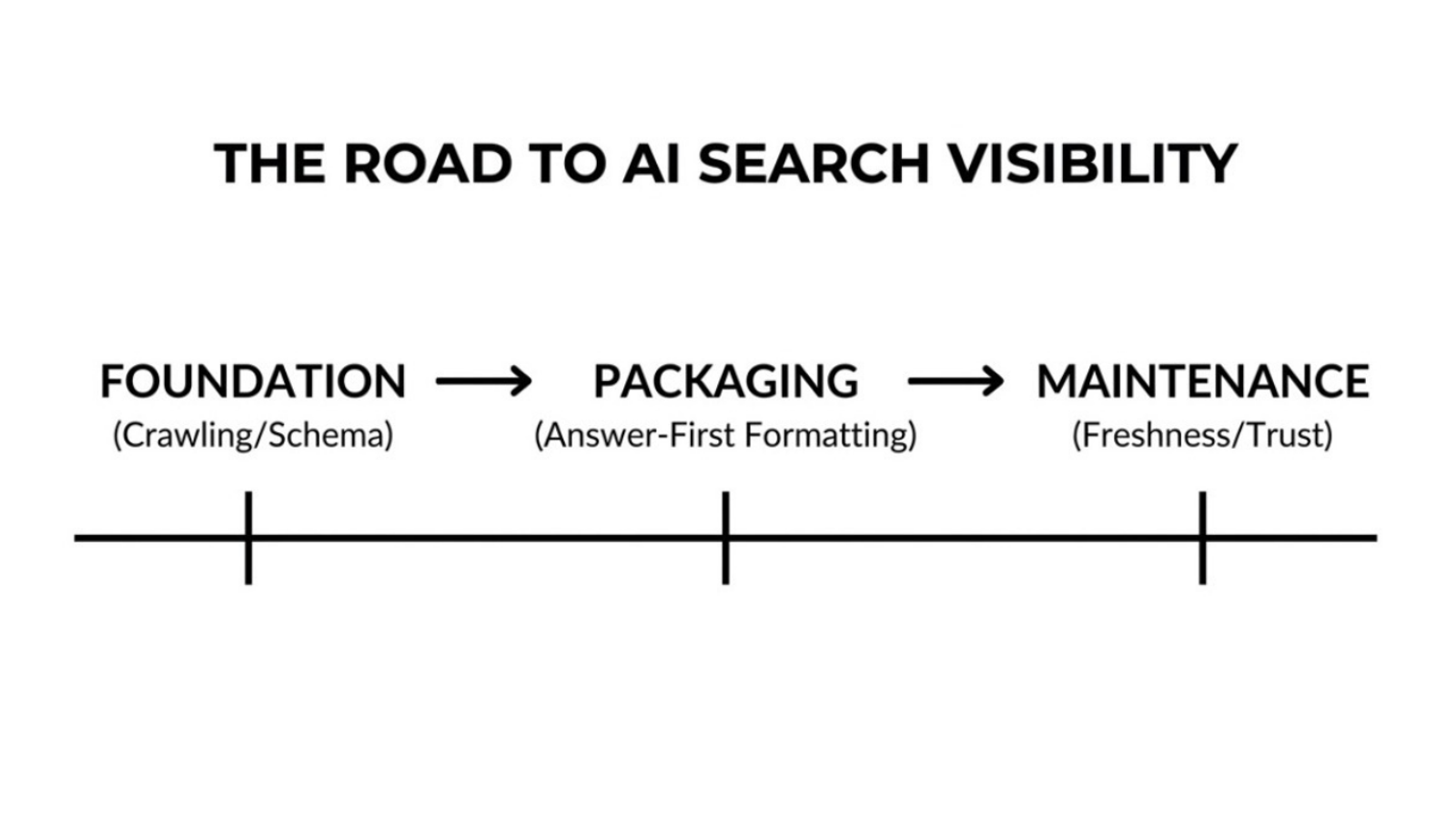
Visibility in AI search depends on a website’s ability to be crawled, indexed, interpreted, and cited with confidence. This framework helps leadership evaluate what already drives discoverability and what still needs fixing. With a clear roadmap from this evaluation, organizations can adapt quickly to evolving AI search trends, enhancing organic reach and user engagement.
What AI Search Readiness Means Today
What separates a site that earns citations in AI answers from one that is invisible to them? The answer is less exotic than you would expect.
Getting ready for AI search isn’t a totally different skill from SEO because it’s using the same basics in a new way. A website is ready when search engines can easily visit it, save and organize its information correctly, understand its parts clearly, and show it in quick answers.
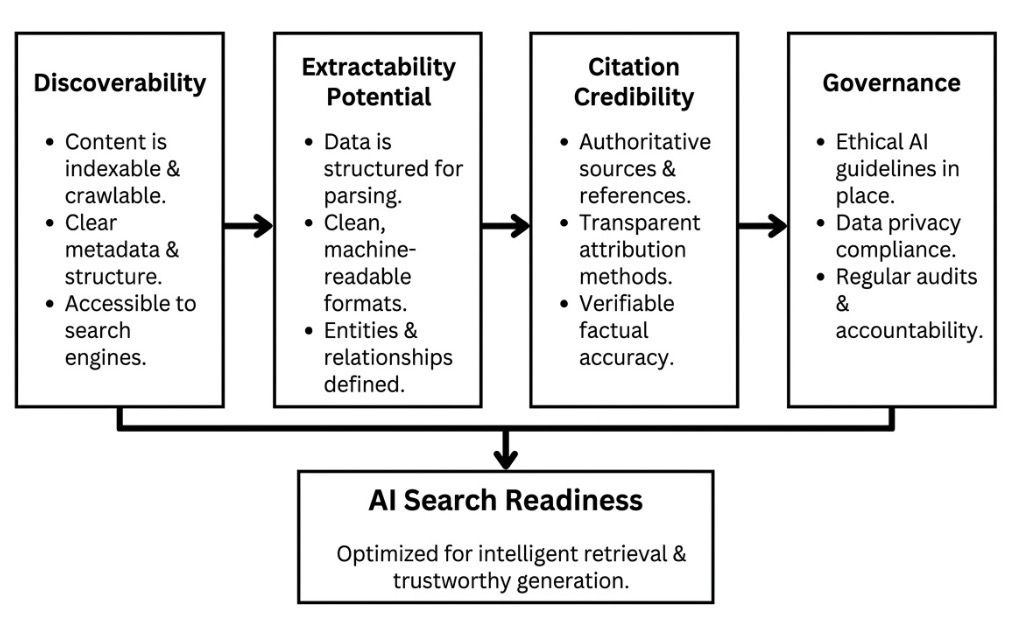
For executives and digital leaders, readiness is best judged against four critical conditions:
- Discoverability — Can search engines find and save the website’s content without problems?
- Extractability potential — Is the content organized so that specific passages can be pulled out and used accurately?
- Citation credibility — Does the content show enough authority and clear details to be trusted and referenced in answers?
- Governance — Does the organization control what information can be shown or hidden in automated answers?
Proven readiness factors like easy technical access, good content quality, organized data, and trust signals matter most because major platforms still rely on basic web access and content quality to rank sites.
The 7 Steps to AI Search Readiness
Here is the complete audit protocol, broken down into seven sequential steps:
- Audit Crawlability and AI Crawler Access Ensure search engines and AI systems can access your pages. Check your
robots.txtfile to confirm Googlebot, OAI-SearchBot, and Common Crawl’s CCBot aren’t blocked from key content. Review meta robots and x-robots-tag settings to avoid unintentionalnoindexornofollowdirectives. Verify canonical tags point to correct, indexable URLs without conflicts. Examine snippet controls likenosnippet,max-snippet, anddata-nosnippetto ensure content isn’t unintentionally hidden from AI-generated results. Remember, Google Extended (which controls Gemini training permissions) is separate from Googlebot. - Review Structured Data and Entity Clarity Confirm your JSON-LD markup clearly communicates each page’s purpose. Focus on essential schema types: Organization for brand identity, Article for authorship and dates, Product for details and availability, FAQ for structured Q&A, and Review for credibility. Clear entity resolution makes a page directly attributable.
- Assess Content and Answer First Formatting Make sure key answers appear early, ideally within the first two to three paragraphs. Use descriptive subheadings that reflect natural questions. Format paragraphs, definitions, and lists so they stand alone clearly. Replace dense text with tables or numbered steps when clarity demands it. Often, restructuring content matters more than rewriting.
- Check Internal Linking and Information Architecture Analyze how authority flows across your site. Remove pages with no internal links. Swap vague anchors keyword rich text. Address topical cannibalization by designating one primary page per subject. Strengthen topic clusters by linking pillar pages logically to supporting content, signaling authority clearly to AI systems.
- Evaluate Trust Signals and Source ability Verify credibility markers AI looks for: clear authorship or editorial responsibility, visible publication or review dates, verifiable citations, accessible contact info, and consistent, factual language. Treat this as governance, not just SEO.
- Verify Freshness and Technical Quality Ensure content stays accurate and technically sound over time. Set regular review schedules for key pages. Maintain consistent terminology and claims across related content. Fix broken links, missing assets, and rendering issues. Confirm fast, stable load times on both mobile and desktop. Fresh, reliable content is critical to earning AI citations.
- Build an Ongoing Measurement and Scoring Model Schedule quarterly re-audits using tools like Google Search Console and PageSpeed Insights. While a one time review helps, ongoing discipline creates lasting advantage.
AI search readiness is not a deliverable—it is an operating system for digital discoverability. Teams that embed these seven steps into their workflow build authority that becomes harder to displace with every passing quarter.
Key Takeaways
- AI search readiness begins with SEO fundamentals. If pages cannot be crawled, indexed, or shown as snippets, they cannot contribute to AI search readiness.
- Technical misconfiguration is one of the most costly and invisible oversights. A single unintentional no index tag or broken canonical can erase months of content investment from AI search visibility. These issues are easily overlooked and surprisingly simple to fix once identified through systematic audit.
- Content packaging often matters more than content quality Restructuring where answers appear on a page frequently creates more value than rewriting the content itself. Placing key information in the first two to three paragraphs is a structural advantage that dramatically improves passage extraction.
- Content freshness is a direct citation signal Regular review schedules and consistent updates are operational requirements for maintaining citation eligibility and compounding authority over time.
- Ongoing discipline creates lasting competitive advantage Organizations that treat AI search readiness as a continuous operational practice outperform those that don’t conduct quarterly reviews.
Lantern handles your complete AI search readiness audit. Schedule yours today and discover exactly what's ready to scale.