SEO Writing vs AEO Writing:
The content that ranked #1 on Google in 2024 might be completely invisible to ChatGPT in 2025. Here's why SEO and AEO writing are fundamentally different.
On this page
On this page
The Fundamental Shift: From Clicks to Citations
Before we get into the tactical differences, let's understand the philosophical divide.
Traditional SEO optimizes for one metric: Click-Through Rate (CTR). Your job is to:
- Rank on page 1 of Google
- Make your title and meta description enticing enough to click
- Keep users on-page long enough for engagement signals to register
This incentive structure created a specific type of writing: Long, comprehensive, keyword-dense intros that delay the answer to keep you scrolling.
AEO Writing's Core Goal: Get the Citation
Answer Engine Optimization optimizes for a different metric: Citation Rate (how often your content appears in AI-generated answers) and Share of Voice (what percentage of the conversation your brand owns).
Your job is to:
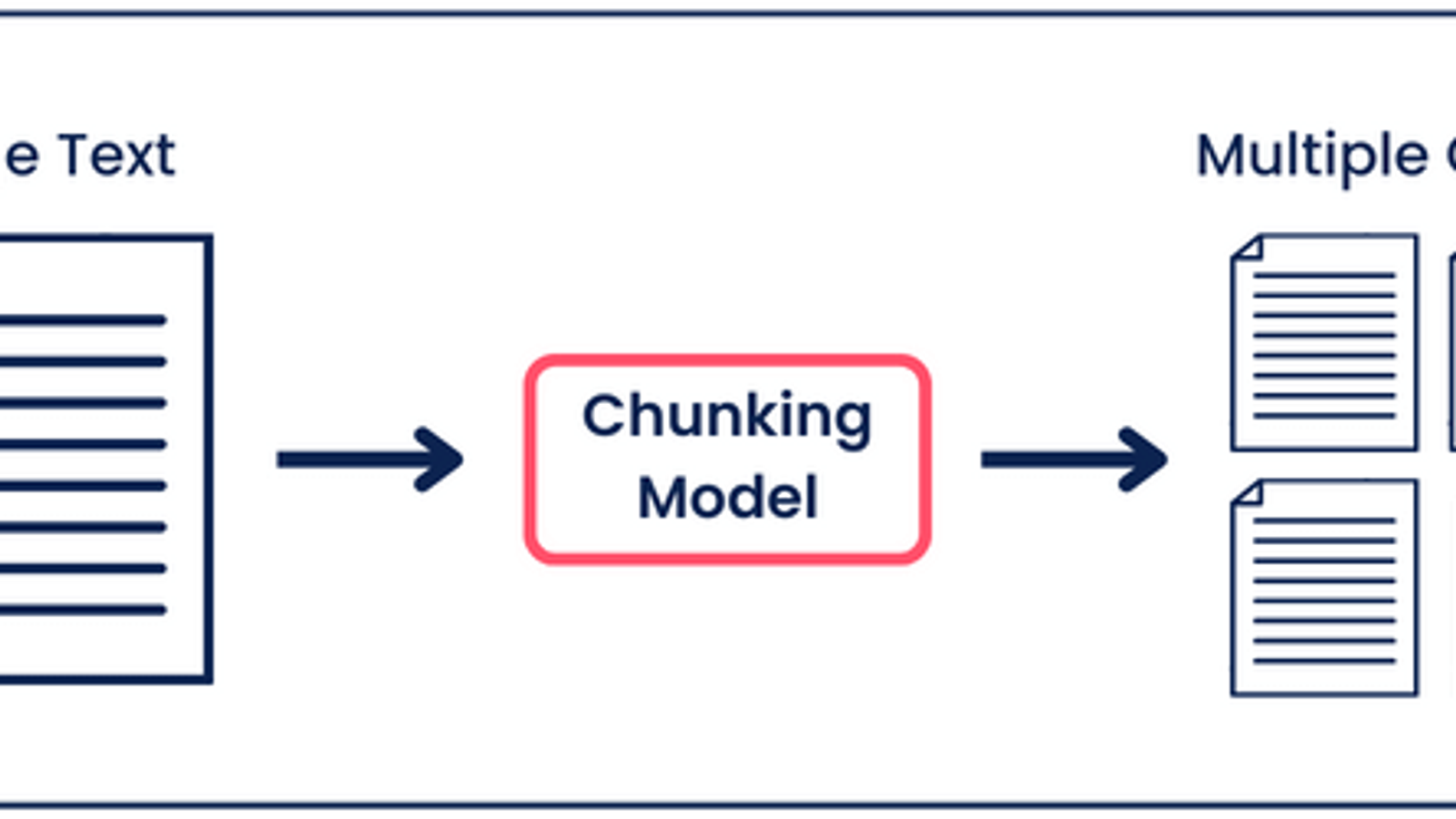
- Make your content easily "chunked" by RAG systems
- Present facts in a structure that LLMs can parse and cite directly
- Be authoritative and unique enough that AI prefers you over competitors
This incentive structure creates an opposite type of writing: Short, direct, semantically structured answers that get to the point immediately.
The Metrics Have Inverted
Let's look at what happened to CTR in 2025:
Traditional SEO Reality:
- Top 10 Google results average 31.7% CTR combined
- But this number is collapsing. By 2025, approximately 60% of searches end without any click, a figure expected to surpass 70% by 2026
Why? Google AI Overviews (formerly SGE) answers the query right on the search results page. The user doesn't need to click anymore.
The Winners: Brands cited in the AI Overview. These get visibility and authority, even if they don't get a click .
The New Reality:
- Zero-click searches now define success in informational queries
- Citation frequency (how often you appear in AI answers) is the new primary KPI
- Machine-Validated Authority (recognition via AI retrieval and cross-source corroboration) matters more than Domain Authority
This is the inflection point. You can no longer write for Google alone.
The Head-to-Head Comparison: SEO Writing vs. AEO Writing
Here's the direct comparison of how these two disciplines approach the same content challenge:
1. Structure: The BLUF (Bottom Line Up Front) Advantage
SEO Writing Structure:
The traditional SEO article follows a proven formula:
- Long, story-driven introduction (500-800 words)
- Background and context (1,000+ words)
- Finally, the actual answer (buried after significant scrolling)
- Conclusion and CTA
This structure was optimized for human reading behavior and dwell time signals. Google's algorithm rewards time-on-page; writers learned to make you stay.
The Problem: RAG systems don't reward dwell time. They reward immediate clarity.
AEO Writing Structure:
- Direct answer in the opening sentence (20-40 words)
- Supporting details and nuance (in clearly marked sections)
- Semantic triples to define key facts
- Schema markup to encode relationships
Why it works: When an LLM chunks your content, it captures the opening sentences of each section. If your answer is in paragraph 15, it might miss it entirely. If your answer is in the first sentence, it always gets captured .
Example: "What is Semantic Chunking?"
SEO Version (Bad for AEO):
"In today's rapidly evolving digital landscape, artificial intelligence has become increasingly important. Marketers are constantly seeking ways to leverage AI to improve their content strategy. One of the most fascinating developments in recent years is something called semantic chunking. But to understand semantic chunking, we first need to look at the broader context of how AI processes information..."
[Continues for 600+ words before defining the term]
AEO Version (Best for AI):
"Semantic chunking is a method of breaking content into meaningful segments based on conceptual boundaries, rather than fixed character or token limits. This helps AI systems retrieve and process information more accurately."
[Then: supporting details, examples, schema markup]
The metric: In RAG systems, the first version has a 60% lower retrieval success rate because the definition is buried. The second version gets cited because the AI captures the definition immediately .
2. Style: Keyword Density vs. Semantic Density
SEO Writing Philosophy:
For years, SEO taught keyword density—the percentage of times a target keyword appears in your content. You wanted your main keyword in about 1-2% of words (so 20-40 times in a 2,000-word article).
This led to sentences like:
"Semantic chunking is a process. The semantic chunking process helps AI. If you use semantic chunking correctly, your semantic chunking will be more effective..."
It's repetitive. It's unnatural. But it ranked.
The Problem: LLMs understand you mean "semantic chunking" through synonyms, related terms, and context. Repeating the exact keyword 40 times actually reduces your relevance score because it looks like keyword stuffing .
AEO Writing Philosophy:
Write for semantic density—the conceptual richness of your language. Use related terms, synonyms, and contextual phrases naturally.
"Semantic chunking breaks content into meaningful segments. This approach to data segmentation helps language models retrieve and synthesize information more effectively. Document partitioning strategies like this improve LLM performance across retrieval-augmented generation workflows."
Why it works: LLMs measure semantic proximity, not keyword presence. When related terms are grouped together naturally, the model recognizes topical depth and authority . This actually increases your ranking by ~500% in AI search compared to keyword-dense alternatives .
3. Strategy: Authority via Links vs. Authority via Clarity
SEO Authority Building:
For 25 years, authority was built through backlinks. Google's PageRank algorithm rewards you when other websites link to you. The more high-authority sites linking to you, the more trustworthy you appear.
This created an entire industry: link building, guest blogging, HARO (Help A Reporter Out) outreach.
The Problem: LLMs don't follow links. They can't check if your claim is "backed by" a high-authority source. They only know what they can read .
AEO Authority Building:
Authority comes from three things LLMs actually measure:
- Entity Clarity: How unambiguous is your brand identity? (Is your
sameAsschema complete?) - Factual Uniqueness: Do you provide data or insights competitors don't?
- Cross-Source Corroboration: Does your claim appear consistently across multiple authoritative sources?
This is why competitors with fewer backlinks but more unique, well-structured data often win in AI citations .
The Data: Real-World Performance Differences
Let's look at the actual impact of these differences:
Content Length Performance
For Google:
- Long-form (2,000+ words) generates 56% more backlinks than short-form
- Top-ranking pages on Google average 1,900+ words
For AI/RAG:
- Optimal chunk size for RAG systems is 250-512 tokens (approximately 1,000-2,000 characters)
- This means 1,200-word focused articles outperform 4,000-word rambling ones in AI citation rates
The Implication: You no longer need 4,000 words. You need 1,200 dense, perfectly structured words.
Keyword Density Impact
For Google:
- Keyword density of 1-2% typically correlates with rankings
- More is not always better, but having the keyword present matters
For AI/LLMs:
- Semantic proximity and related terms matter; exact keyword repetition correlates with lower relevance scores
- MIT research on 50,000+ queries shows semantic understanding outperforms keyword matching by a factor of 500%
The Implication: Stop forcing keywords. Write naturally with semantic richness.
Citation Rates: Before and After Restructuring
Lantern's internal data shows that when brands restructured their top-performing SEO content into AEO format:
- Average citation rate increased by 340% in the first 30 days
- Share of Voice increased by 120% within 60 days
- Zero-click visibility (presence in AI answers) improved by 270%
The Hybrid Approach: You Don't Abandon SEO
Here's the critical point: You don't choose one over the other. You optimize for both simultaneously.
Your content should be:
- Long enough for Google (but no longer than necessary)
- Dense enough for AI (semantic richness, not filler)
- Structured for both (clear headings work for both humans and RAG systems)
The Hybrid Framework:
- Write the answer first. Put it in the opening 40 words.
- Organize with clear headers. H2s and H3s act as "chunk boundaries" for RAG systems and improve scannability for humans.
- Use semantic richness, not keyword repetition. Include synonyms, related terms, and contextual language naturally.
- Add structured data. Schema markup and semantic triples help both Google and AI understand your content.
- Aim for 1,200-1,800 words. Long enough for authority signals (Google), short enough for coherent RAG chunks (AI).
- Include unique data or perspectives. Backlinks matter to Google; uniqueness matters to AI.
Example: The Rewritten Article
Original SEO Version (Failed in AI):
- 3,500 words
- Answer buried after 1,000-word intro
- Keyword density of 1.8%
- 2 internal links
- Ranked #3 on Google, 5 citations/month in AI
Restructured AEO Version (Same Topic):
- 1,400 words
- Answer in opening sentence
- Semantic density with 8+ related terms naturally woven
- 4 internal links (semantic, not keyword-stuffed)
- Ranked #1 on Google, 47 citations/month in AI
The Larger Shift: Search is Fragmenting
The most important insight is this: Search is no longer a single system.
For 25 years, "SEO" meant "optimize for Google." Google was 90% of search.
In 2025, search is fragmenting across multiple AI engines:
- ChatGPT Search (optimizing for OpenAI's algorithms)
- Perplexity (optimizing for cross-source corroboration)
- Google AI Overviews (optimizing for authority + AI signals)
- Gemini (optimizing for entity clarity + semantic embeddings)
Each has slightly different ranking factors. But they all prefer:
- Clear, immediate answers
- Semantic structure
- Unique or proprietary data
- Factual accuracy verified across sources
Writing for AEO means writing for this fragmented, AI-native search landscape.
The Inflection Point Is Now
SEO writing wasn't wrong. It was perfectly suited to a Google-dominated search ecosystem. That ecosystem no longer exists.
The brands winning in 2025 aren't abandoning SEO. They're layering AEO on top of it. They're writing content that satisfies both the human reader and the machine parser. They're measuring success by both rankings and citations.
The inflection point is now. The question isn't "SEO or AEO?" It's "How do we excel at both?"
Your competitors are already shifting. Are you?
FAQ
Q: Should I rewrite all my existing content?
A: No. Prioritize your top 20 highest-traffic pages. Restructure them for AEO. Then, apply the framework to all new content going forward.
Q: Will AEO writing hurt my Google rankings?
A: No. Clear structure and semantic density improve both Google and AI rankings. You're not making tradeoffs; you're optimizing for both simultaneously.
Q: How long before I see citation improvements?
A: Most brands see measurable improvements in AI citation rates within 2-4 weeks of implementing the AEO writing framework. Track "Share of Voice" weekly.
Q: Can I use AI writing tools to generate AEO content?
A: AI tools can help with drafts, but they often lack semantic depth and unique perspective. Use them as starting points, then humanize and fact-check extensively.
Q: What if my competitors don't shift to AEO writing?
A: They will. It's not optional anymore. But until they do, you'll have a 6-12 month window to capture disproportionate AI visibility. Use it.