How AI Search Is Changing the Product Discovery Journey
Many people are making speculations and dropping hot takes about the emergence of AI and its impact on the search experience.
On this page
On this page
If you are a marketer who has scrolled LinkedIn even just once within the past few weeks, you know AI is a hot topic right now. Many content folks are making speculations and dropping hot takes about the emergence of AI and its impact on the search experience.
While some are declaring SEO dead and presenting LLM optimization as its successor, many others are urging content marketers to abandon the AI hype train and hold on fast to the SEO fundamentals they've always known.
Confused about which group is most likely right? This article will separate the wheat from the chaff and clarify the real impact AI is having on search. It'll also touch on the right attitude content marketers should have towards AI search tools so their brands don't miss out or get buried in the AI search era.
How Prospects Found Products before AI
Before ChatGPT and other LLMs became household names, search engines reigned superior for discovering new products or brands.
For example, let's say you are a content manager who decides to purchase a ContentOps tool because your content briefs, guideline docs, and product documentation keep getting lost within long email threads with multiple writers. You would most likely head to Google and type something like “best tool to efficiently manage my content production process”.

This search will lead you to these high-ranking content pieces from Wordabe and The CMO.
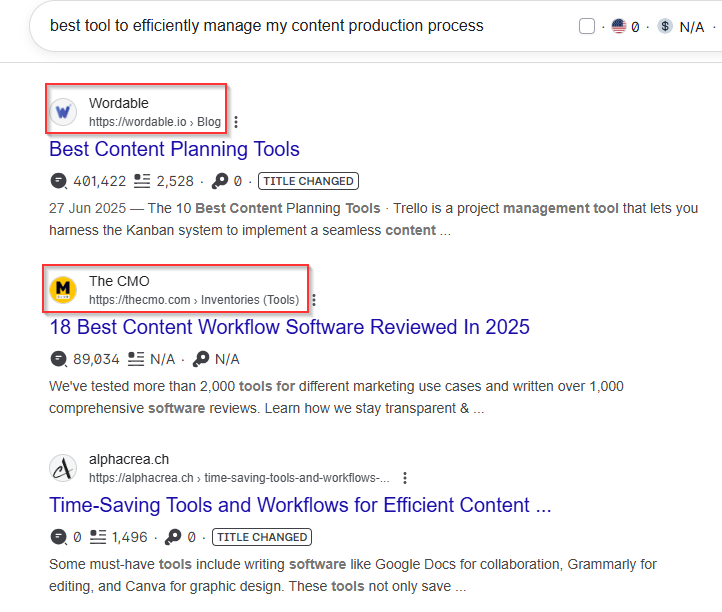
You can then click on any of these blog pieces, say the one from Wordable, read it, and note Wordable as a potential solution.
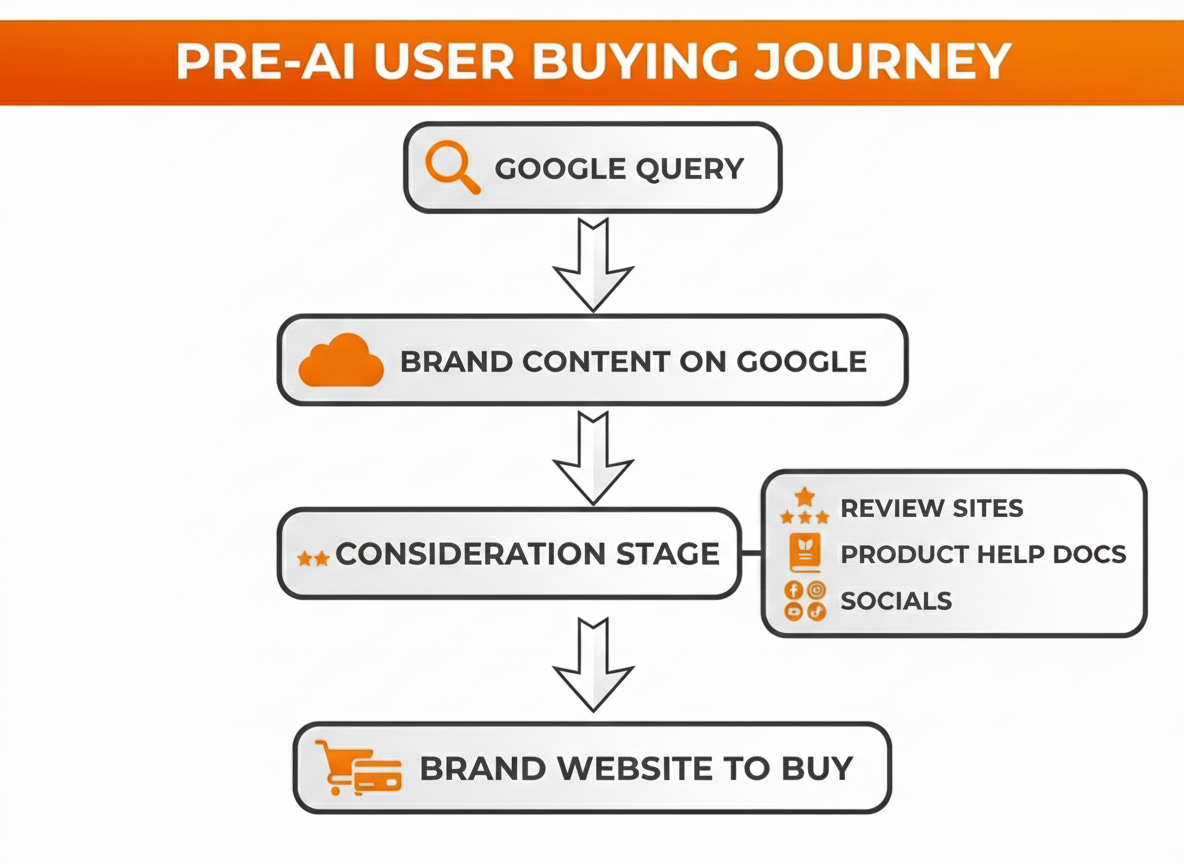
Your discovery of Wordable in this instance was a pretty straightforward process that looks like:
How Prospects Find Products Now
Now, with AI search tools at every turn of the internet, many people turn to ChatGPT and its friends first when they run into a problem.
According to Capgemini’s 2025 consumer-behaviour survey, 58% of consumers say they’ve replaced traditional search engines with generative AI tools as their go-to for product or service recommendations.
And in the B2B world, MasterB2B found through their 2024 State of B2B eCommerce report that 86% of B2B buyers would be “very” or “somewhat” likely to use a ChatGPT-like tool on a website to help with product research.
So, for our hypothetical marketer who needs a ContentOps platform, they'll likely enter their query into ChatGPT rather than Google.
And this time around, the products on their consideration list will be the brands mentioned in ChatGPT’s output.
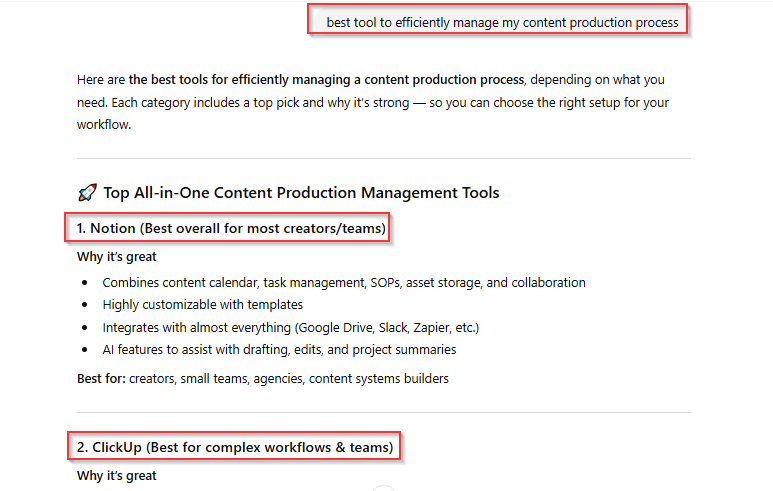
So, even though with AI search tools, product/brand discovery still starts with content discovery, it's no longer about content ranking high on search engines, but about content being cited/linked to in LLM responses.
AI search tools have made the content discovery journey look something like:
The Critical Difference Pre and Post AI Search Tools
If you put the old and new product discovery journeys side by side, you'll see they are almost identical, except for how the product consideration list is formed.
With AI tools, many prospects no longer use search engines to find solutions to their problems. Instead, they turn to LLMs, where they can provide detailed prompts and receive more accurate, targeted recommendations.
Instead of just checking out brands whose content shows up on search engine result pages, they are asking AI to decide which brands are worth digging into. So, if your brand isn’t showing up in LLM outputs, you won’t even be considered.
Thus, AI tools have collapsed the product discovery journey and displaced search engines from their traditional first-touchpoint spot.
How Should Marketers Approach SEO Now?
It’s easy to see this change in the product discovery journey and think you need to shift completely from SEO to AEO/LLM optimization. After all, prospects need to find you in LLM outputs to even consider buying from you. But facts remain that:
AI traffic is still small, compared to SEO traffic
According to Tollbit’s state of bots report, AI chatbots, on average, drive referral traffic at a rate that is 96% lower than traditional Google search.
Even though prospects are adopting AI tools fast, with ChatGPT and Perplexity referral traffic growing by 155.5% and 54.8% from Oct 2024 to Feb 2025, SEO traffic is still at least 90x that. For now.
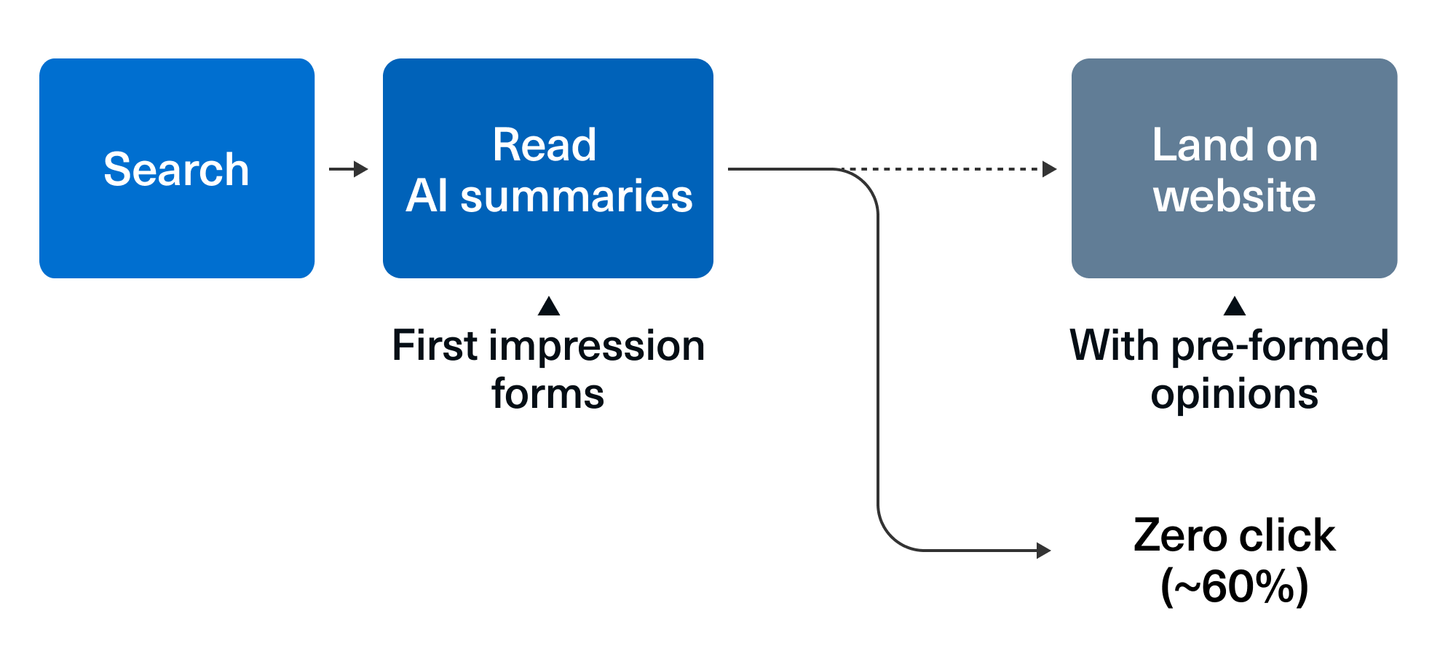
Most prospects still use search engines to complement research from AI tools.
After getting recommendations from LLMs, prospects aren't just switching to the brand website and purchasing.
They are turning to Google and other search engines to read reviews, compare options, and check out detailed product features.
So, after your product gets recommended on LLMs, you do need strong SEO content to win over the considering prospect.
Most AI search tools pull content from top-ranking search results.
Search engines have been in existence for years and have established content standard guidelines. It's not surprising, then, that many LLMs trust content that already ranks high in search engines and often cite and link to these content pieces in their outputs.
For example, according to Artefact, 96% of AI Overviews cite at least one page that is in the top 10 organic rankings.
Also, research from BrightEdge unveiled that 60% of Perplexity citations overlap with the top 10 Google organic results.
What Marketers Should Do Now: The Hybrid Approach
But one thing is very clear.
AI search tools might be pulling content heavily from and sending less traffic to websites than search engines right now, but they will be an integral part of the future of search.
This is highly likely since:
- Most users love AI search tools. According to HigherVisibility, about 84% of users are satisfied with their experiences with AI search tools, and adoption continues to rise.
- More and more companies are investing heavily in AI advancements at the moment, including Google, a search engine.
If you want to get your brand and content ready for an AI-first future while ensuring you don't lose out on the traffic you're already getting, you need to adopt a hybrid approach that combines AEO and SEO.
By pulling the levers on both AEO and SEO, instead of focusing on just one, you get to position your content to not only rank high on search engines but also get pulled, cited, and linked to in LLM outputs. This way, you can gain massive discoverability from both channels.
As Abby Murray, Co-founder of Storyarb, said, “Your SEO and AEO don’t need a divorce”. Both matters.
Light up Your Product Discovery Journey with Lantern
LLM optimization is still new, with shaky foundations and very few proven strategies. So, just like any new discipline, the gold standard for knowing what works and what doesn’t is tracking your results and staying up to date on trends and news as they emerge.
Luckily, Lantern can help you with both. With Lantern, you can track your brand visibility in ChatGPT, Google Gemini, Perplexity, Google AI Overviews, and Claude as you optimize your content for LLM visibility.
Also, Lantern’s blog is frequently updated and chock-full of proven tactics other brands have used to gain impressive LLM mentions and citations.
If you won't mind a trusted companion as you navigate the evolving search environment, try out Lantern for free today.