Google AI Overviews Changes the Customer Journey
Google's AI Overviews represents one of the most significant shifts in search since the Google's inception, fundamentally altering how users discover information and how brands capture attention online
On this page
On this page
Google AI Overviews Changes the Customer Journey
Google's AI Overviews represents one of the most significant shifts in search since the Google's inception, fundamentally altering how users discover information and how brands capture attention online. For chief marketing officers, marketing teams, and growth leaders, this transformation demands an immediate strategic response. Here's everything you need to understand about AI Overviews, their impact on your business, and how to adapt your marketing strategy in this new era of search.
What Are Google AI Overviews?
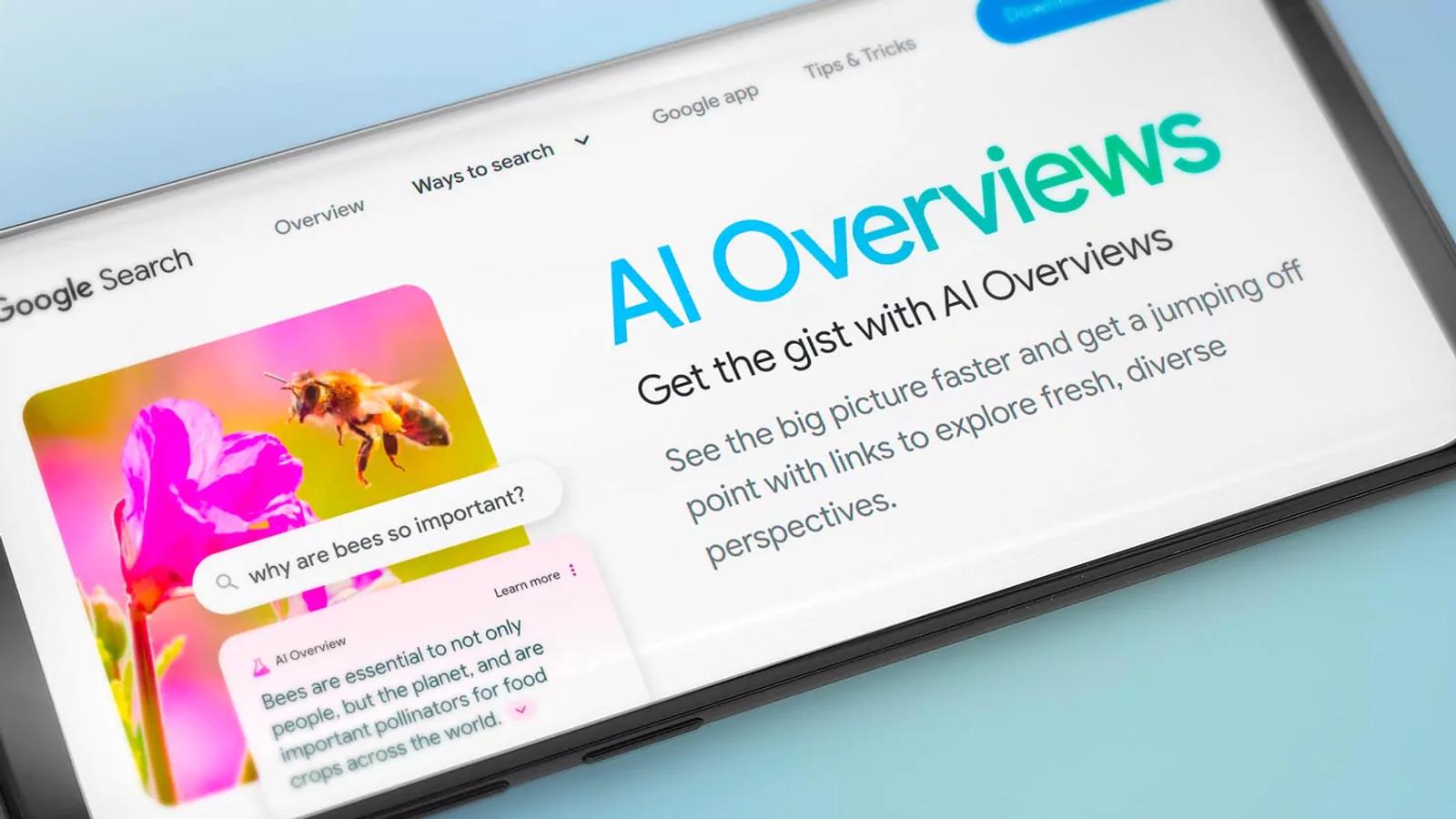
Google AI Overviews (formerly known as Search Generative Experience or SGE) are AI-generated summaries that appear at the top of search results, synthesizing information from multiple sources to answer user queries directly on the search page. Powered by Google's Gemini AI models, these summaries occupy premium positioning—more than 1,700 pixels at the top of search results—and provide users with instant answers without requiring them to click through to websites.
As of May 2025, 49% of all search results now feature an AI Overview—nearly double the 25% seen in August 2024. Google has confirmed that searches triggering AI Overviews have resulted in more than a 10% increase in engagement across major markets, signaling that this feature is rapidly becoming the new default search experience.
In November 2025, Google released its most advanced iteration yet: AI Mode, which uses the new Gemini 3 model and represents "the most powerful AI search" with advanced reasoning capabilities and multimodal functionality. AI Mode goes beyond traditional search by using "query fan-out" techniques that break down questions into subtopics and issue multiple queries simultaneously, enabling deeper web exploration than ever before.
The Zero-Click Search Reality: What's Happening to Your Traffic
The rise of AI Overviews has accelerated a trend that should concern every marketer: zero-click searches. When an AI Overview answers a user's query directly on the results page, many users no longer feel the need to click through to any website.
The data is stark:
- Among searches without AI Overviews, the median zero-click rate is approximately 60%
- Among searches with AI Overviews, the zero-click rate jumps to around 80%, with an average of 83%
- Research indicates that AI Overviews can cause a 15-64% decline in organic traffic, depending on industry and search types.
- Google's AI Overviews have pushed top-ranking links down by as much as 1,500 pixels, reducing click-through rates even for well-ranked sites
Bain's research reveals that approximately 80% of consumers now rely on zero-click results in at least 40% of their searches, reducing organic web traffic by an estimated 15% to 25%. This shift is particularly devastating for content marketers who have built strategies on generating awareness through informational content—guides, tutorials, and how-to articles that AI Overviews now answer directly
The Visibility Paradox: Being Seen Without Being Clicked
While traditional SEO focused on rankings and clicks, AI Overviews have created a new paradigm: visibility without traffic. This fundamental shift requires marketing leaders to rethink what success means in search.
What's notable is that web mentions correlate much more strongly than backlinks (0.218). This means your brand's presence across third-party websites, blogs, news outlets, and online communities matters more than traditional link-building for AI visibility.
What This Means for CMOs and Marketing Leadership
The implications of AI Overviews extend far beyond the SEO team. This shift is reshaping the entire marketing function and demanding C-suite attention.
The CMO as "Chief Growth Architect"
Forward-thinking CMOs are reframing their role from marketing chief to "chief growth architect". In an AI-first world, the CMO must design integrated strategies that connect demand signals across the organization in real-time, using AI to amplify creativity and accelerate customer impact.
IBM research reveals that 65% of organizations say realizing the full value of generative AI depends on effectively leveraging proprietary data. This means CMOs must own the data inputs, commercial growth platforms, and measurement models that form a state-of-the-art martech stack—working hand-in-hand with the CTO to replace isolated optimization logic with enterprise-wide logic.
The Growth vs. Cost Conversation
When AI enters boardroom discussions, the question is often "How much money will it save?" But leading CMOs know this is the wrong conversation. The right question is: "How much growth will it create?"
A 10% gain in growth beats a 20% cut in cost every time. At Acquia, SEO traffic dipped 13% in one recent quarter, but LLM-driven traffic grew 22% and converts at nearly four times the rate of traditional sources. This data underscores that AI search isn't replacing opportunity—it's redistributing it to those who adapt strategically.acquia
Impact on Marketing Teams and Growth Strategies
Restructuring Marketing Organizations
Marketing leaders who understand this shift early will have a significant competitive advantage. Those who don't risk becoming invisible in a search landscape where users increasingly get their answers without ever clicking through to a website.
New Measurement Frameworks Required
Traditional SEO metrics like rankings, impressions, and click-through rates no longer tell the complete story. Marketing teams must develop new measurement frameworks that capture:
- AI citation frequency – How often your brand is mentioned in AI Overviews
- Cross-platform visibility – Presence across Google AI Mode, ChatGPT, Perplexity, and other AI search platforms
- Reference share analysis – Your share of citations compared to competitors
- Sentiment analysis in AI answers – How your brand is portrayed in AI-generated responses
What This Means for SEO Strategy
AI Overviews don't eliminate the need for SEO—they transform it. Traditional SEO remains the foundation, but it must now be supplemented with strategies tailored to how AI systems select and cite content.
Traditional SEO Still Matters (But Isn't Enough)
Google has confirmed that AI Overviews use the company's core ranking systems, including PageRank, RankBrain, BERT, content helpfulness, freshness, and review signals. Research shows that 52% of AI Overview sources come from the top 10 search results, meaning ranking well remains essential.
However, ranking alone is no longer sufficient. To be featured in AI Overviews, your content must also be clear, structured, semantically rich, and demonstrate strong E-E-A-T (Experience, Expertise, Authoritativeness, Trustworthiness) signals.
Content That Gets Cited in AI Overviews
To optimize for AI Overview inclusion, content must:
- Answer questions directly and concisely – Place clear answers to primary questions in the first 2-3 paragraphs, ideally under 60 words
- Use structured formatting – Implement proper H1-H6 hierarchy, bullet points, numbered lists, and short paragraphs (2-3 sentences each)
- Create comprehensive topic coverage – Develop content clusters that address main topics and related questions from multiple angles
- Implement schema markup – Use structured data to help AI systems understand and categorize your content
- Demonstrate real expertise and experience – Include case studies, first-hand experiences, expert quotes, and verifiable credentials
- Keep content fresh – Regularly update with new data, statistics, and insights every 60-90 days
- Build topical authority – Create interconnected content that signals comprehensive expertise in your domain
The Shift from SEO to GEO and LLMO
Marketing teams are now navigating three parallel optimization strategies:
- SEO (Search Engine Optimization) – Maintaining baseline eligibility through traditional ranking factors
- GEO (Generative Engine Optimization) – Capturing citations in AI-generated summaries through synthesis-ready content
- AEO (Answer Engine Optimization) – Building brand presence across all AI platforms through semantic clarity and authority
E-E-A-T serves as the quality marker across all three strategies. Content with strong E-E-A-T characteristics is more likely to advance through AI's content selection process, which involves query fan-out, passage ranking, source verification, and citation selection.
Paid Search and Advertising in AI Overviews
Google is actively integrating advertising into the AI search experience, creating both challenges and opportunities for paid search strategies.
The Rising Cost of Paid Search
The decline in organic visibility has driven more businesses into Google's paid advertising ecosystem, significantly increasing costs:
- Retail & e-commerce: CPC up 18-25%
- Legal & insurance: CPC increases of 15-22%
- Local services: Up 12-17%
Since July 2025, small businesses have reported conversion drops of 12-18% even as cost-per-acquisition rose 20-30%. More businesses now view paid ads as a baseline necessity to maintain exposure rather than a growth channel.
Strategic Opportunities for Marketers
While AI Overviews present challenges, they also create significant opportunities for brands that adapt strategically.
Early Mover Advantage
The AI search landscape is still evolving, and brands that invest now in understanding and optimizing for AI visibility will establish competitive advantages. As McKinsey notes, "This shift carries risk, but it's also an opportunity to quickly and strategically adapt, driving competitive advantage in the process".
Brand Visibility Without Clicks Still Matters
Even when users don't click through, appearing in AI Overviews, featured snippets, and other SERP features builds brand awareness, authority, and trust, keeping your brand top of mind for future engagement. Research shows that visibility in AI Search can provide an order-of-magnitude increase in opportunities to be seen compared to traditional organic search.
Conversational Search Creates New Touchpoints
Google CEO Sundar Pichai revealed that AI Mode has over 100 million monthly active users. As search becomes more conversational, brands that understand and adapt to conversational search behavior will increase market share while those clinging to keyword-based strategies will be left behind.
Expanded Discovery Across Platforms
AI search isn't limited to Google. Non-Google channels like ChatGPT and Perplexity are capturing more traffic, pushing marketing strategies beyond standard search engines. Brands must now optimize for visibility across multiple AI platforms, requiring a multi-channel content distribution strategy that includes Reddit, Quora, and other community platforms where LLMs source information
Action Steps for CMOs, Marketers, and Growth Teams
To succeed in the age of AI Overviews, marketing leaders should take these strategic actions:
1. Shift Your Content Strategy
Move from keyword-focused content to comprehensive, structured resources that directly answer user questions. Prioritize depth, accuracy, and contextual relevance. Create content that works as both human reading material and AI training data.
2. Invest in Brand Visibility Beyond Your Website
Focus on building branded web mentions through PR, guest contributions, partnerships, and community engagement. Your presence across third-party sources is now more important than traditional link building.
3. Implement New Measurement Systems
Develop frameworks to track AI citation frequency, brand visibility in AI responses, and sentiment analysis across AI platforms. Don't rely solely on traditional traffic metrics.
4. Restructure Teams for AI-First Marketing
Create cross-functional pods that combine SEO expertise with data science, content strategy, and AI capabilities. Invest in training and upskilling to manage human-to-AI workflow integration.
5. Adopt AI-Powered Advertising Strategies
Embrace broad match keywords, AI Max for Search campaigns, and Performance Max to capture conversational queries. Optimize for broader, exploratory searches rather than traditional exact-match keywords.
6. Test and Iterate Continuously
The AI search landscape is evolving rapidly. Establish processes for continuous experimentation, measurement, and optimization. Monitor AI Overview appearance for your target keywords and adjust content strategy accordingly.
8. Diversify Your Channel Strategy
Don't put all your eggs in Google's basket. Optimize for visibility across ChatGPT, Perplexity, Claude, and emerging AI search platforms. Build presence on social platforms like TikTok and Instagram where younger audiences increasingly discover information.
The Bottom Line
Google's AI Overviews represent a fundamental change in how users discover information and how brands capture attention. While this shift poses challenges reduced organic traffic, increased paid search costs, and new measurement complexities it also creates opportunities for marketing leaders who adapt strategically.
The CMOs and marketing teams that will thrive are those who:
- Embrace AI as a strategic growth engine, not just a cost-cutting tool
- Build comprehensive content that serves both human readers and AI systems
- Invest in brand visibility across the broader web, not just their own properties
- Develop new measurement frameworks that capture AI-era marketing performance
- Restructure teams and processes for AI-first marketing
- Take action now, before competitors establish insurmountable advantages
The age of AI Overviews isn't coming it's already here. 49% of searches already feature AI Overviews, and that percentage is growing rapidly. The question isn't whether AI search will reshape digital marketing it's whether you'll be ready when zero-click searches become the majority.
The brands that win in this new era will be those that understand AI Overviews aren't a threat to be scared of, but a transformation to be navigated strategically with the right leadership, investment, and commitment to continuous adaptation.