2025 Search Recap:Trends, Data & What's Next
Ranking #1 is no longer enough. Your content must be cited within AI-generated answers to capture user attention. Brands that optimized for AI citations saw 40% higher brand recall than those relying solely on traditional rankings.
On this page
On this page
2025 Was the AI Search Inflection Point: Data, Shifts, and 2026 Strategic Imperatives
If 2024 was the year AI search emerged, 2025 was the year it dominated. This transition wasn't merely about new features; it represented fundamental behavioral shifts in how users discover information and how brands must optimize for visibility. Let’s dive into the data that defined search in 2025 and what it means for your strategy moving forward.
Trend #1: AI Overviews Reached 1.5 Billion Users
The single biggest story of 2025 was Google's AI Overviews hitting 1.5 billion monthly users. This massive adoption fundamentally changed how search results are presented and consumed.
What changed dramatically in 2025 was the visibility landscape: 20% of all SERPs now show AI Overviews, and 25% of top-of-funnel queries trigger AI-generated summaries. As a result, zero-click searches increased by 35% as users received answers directly from AI summaries. The data confirms that traditional blue-link Click-Through Rates (CTRs) dropped 12–15% for informational queries, while AI Overview citations became the new battleground for visibility. This means ranking #1 is no longer enough; your content must be cited within AI-generated answers to capture user attention. Brands that optimized specifically for AI citations saw a significant 40% higher brand recall than those relying solely on traditional rankings.
Trend #2: The Multi-Platform Search Reality
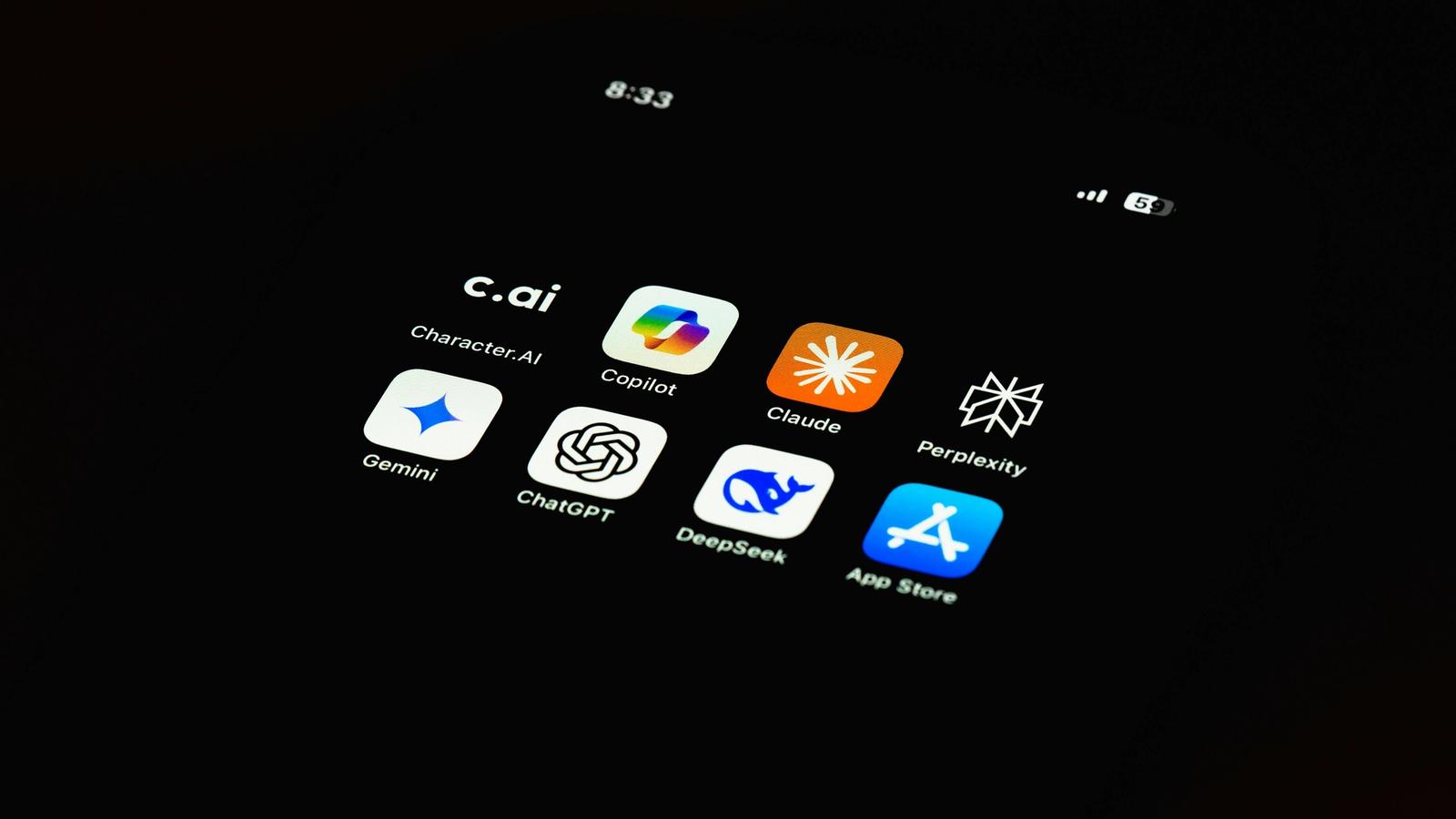
2025 firmly proved that search is no longer synonymous with Google. Users now bounce between four major AI platforms, and each exhibits different citation behaviors.
Mid-2025 platform usage data solidified this fragmentation:
- ChatGPT: 800 million monthly users
- Google Gemini: 420 million monthly users
- Perplexity AI: 150 million monthly users
- Claude: 35 million monthly users
A critical finding reveals a 40–60% platform overlap—the same users query multiple AI systems for the same information and receive 75% different answers. This fragmentation demands that your brand achieves visibility across all platforms, not just a single one.
Citation patterns vary dramatically among these systems: Perplexity cites academic sources 3x more than ChatGPT, Gemini prioritizes Google-indexed content with strong mobile performance, and ChatGPT values comprehensive, long-form content with clear structure. The takeaway: single-platform optimization is dead. Successful brands in 2025 adopted multi-channel Answer Engine Optimization (AEO) strategies that tailored their content structure for each platform's unique citation algorithm.
Trend #3: GEO (Generative Engine Optimization) Emerged as a Discipline
As the field matured in 2025, Answer Engine Optimization (AEO) evolved into Generative Engine Optimization (GEO). The fundamental difference is that AEO focused simply on being cited, while GEO focuses on shaping the entire generated response.
Key GEO developments in 2025 included:
- Structured data usage increased 85% among top-performing AI-cited content.
- LLM.txt file adoption jumped from 5% to 32% of major enterprise sites.
- Content written in a Q&A format was cited 2.3x more than traditional articles.
The core methodology shift involved moving away from optimizing for keywords and toward optimizing for information completeness. Content that successfully answered the "what, why, how, when, and who" of a topic saw 3x higher citation rates across all AI platforms. This means your content strategy must shift from keyword-focused to answer-focused, creating content that AI systems can parse, trust, and synthesize into authoritative responses.
Trend #4: E-E-A-T Became the Gatekeeper
Experience, Expertise, Authoritativeness, and Trustworthiness (E-E-A-T) transitioned from a "nice-to-have" to a make-or-break factor in 2025.
The data underscores this necessity:
- Author byline content was cited 58% more than anonymous content.
- Domain authority correlation with AI citations increased from 0.34 to 0.67 year-over-year.
- Sites with author bios and credentials were 3.5x more likely to be cited in high-stakes queries like health, finance, and legal topics.
Platform-specific E-E-A-T signals also emerged: ChatGPT heavily weights author credentials and publication third-party history, Perplexity prioritizes peer-reviewed sources and academic affiliations, and Gemini favors Google's "About This Author" markup and structured author data. This is definitive proof that anonymous content is dying. Every piece of content requires clear authorship, credentials, and entity markup, and brands that invested in author authority building saw a 2.8x improvement in AI citation frequency.
Trend #5: Citations Replaced the Links
In 2025, citations became the new backlinks. Just as backlinks signaled authority to Google, citations now signal authority to AI systems.
This shift was profound: Traditional backlink tracking tools added AI citation tracking as a core feature, and citation quality scoring emerged as a metric (similar to Domain Authority). Brands with high citation velocity (new citations per month) gained competitive moats in AI visibility. A study of 10,000 queries across ChatGPT, Gemini, and Perplexity found that citations from high-authority domains (original research, academic papers, news outlets) were 4.7x more likely to be repeated across multiple AI platforms. This means link building has evolved into citation building; the primary goal is getting AI systems to mention and cite your content within generated answers, not just link to it.
Trend #6: Multi-Modal Search Dominated
2025 was the year search broke beyond text. AI search engines now seamlessly integrated images, video, and voice, forcing brands to optimize across all formats.
The scale of this trend is significant:
- Gemini's multimodal queries increased 340% year-over-year.
- Image-based product searches in AI systems grew 210%.
- Video content citations in AI responses increased 180%.
Specific optimizations proved highly effective: Product images with structured data were 3.2x more likely to appear in AI shopping recommendations. Video transcripts with clear Q&A structure were cited 2.8x more than videos without transcripts, and infographics with embedded schema markup were 4.1x more likely to be extracted by AI systems. If your content strategy remains text-only, you are missing 60% of AI citation opportunities.
Trend #7: The Zero-Click to Zero-Hesitation Shift
User behavior evolved beyond zero-click searches (getting answers without clicking) to zero-hesitation decisions (trusting AI recommendations immediately).
The behavioral shift data is stark: AI recommendation trust increased from 58% to 79% year-over-year. Purchase decisions influenced by AI recommendations grew from 23% to 41%. Furthermore, brand discovery via AI (not traditional search) increased 165%. This means AI isn't just answering questions—it’s shaping decisions. If your brand isn't cited in AI responses, you are invisible to 41% of purchase-ready users.
Trend #8: LLM.txt Files Became Strategic Assets
The LLM.txt file—a simple markdown file that provides instructions to AI crawlers on what to index—became a strategic weapon in 2025.
Adoption data shows its growing importance:
- 32% of Fortune 500 companies implemented LLM.txt files by Q3 2025.
- Sites with optimized LLM.txt files saw 2.1x higher AI citation rates.
- Sites without LLM.txt files were 3.4x more likely to have AI "hallucinations" about their brand.
What worked were clear structures, prioritized content sections, explicit instructions about what not to index, and comprehensive brand information. The LLM.txt file is the new robots.txt; it must be strategically optimized for AI crawlers, not just technically correct.
Trend #9: Unified Visibility Scoring Became Essential
With users querying across Google, ChatGPT, Gemini, Perplexity, and Claude, measuring success on a single platform became meaningless.
The solution introduced was unified visibility scoring, which aggregates performance across all platforms into a single metric. Brands that adopted unified visibility tracking in 2025 achieved:
- 28% faster optimization cycles
- 2.3x better resource allocation
- 43% improvement in brand recall (due to consistent presence across channels)
You can no longer afford siloed analytics. Your dashboard must track Google rankings + AI citations + sentiment + competitive positioning in one comprehensive view.
What This Means for 2026: 5 Strategic Imperatives
Based on 2025's dramatic shifts, brands must adopt these 5 strategic imperatives:
- Deploy Multi-Platform AEO Strategy: Your optimization must adapt to the unique citation patterns of Google, ChatGPT, Gemini, Perplexity, and Claude simultaneously.
- Build Author Authority: Every piece of content requires clear authorship, credentials, and entity markup. Investing in author authority building is now a core SEO/AEO tactic.
- Create Citation-Worthy Content: Shift your content focus from keywords to answers, ensuring structure and information completeness allow AI systems to parse, trust, and synthesize your responses.
- Implement LLM.txt Files: Treat this file as a strategic asset, optimizing it for AI crawlers with clear content priorities and brand information.
- Track Unified Visibility: Measure Google rankings + AI citations + sentiment in a single dashboard, as single-platform metrics are obsolete.
The Bottom Line: 2025 Was the Inflection Point
2025 was the year AI search became mainstream. The data is conclusive: 1.5 billion users now rely on AI-generated answers; the 40–60% platform overlap makes multi-channel optimization mandatory; citation frequency is the new Domain Authority; E-E-A-T signals determine whether AI systems trust your content; and unified visibility tracking is essential for competitive intelligence.
The brands that won in 2025 recognized search evolved from a single-channel game (Google) to a multi-channel ecosystem where visibility means being cited, not just ranked. The brands that will win in 2026 will be those that master both traditional SEO and AI search optimization simultaneously.
Lantern: The Go-To Platform for Dominating Search in 2026
As we head into 2026, mastering both traditional SEO and AI search optimization simultaneously is critical. Lantern is the only unified platform that tracks your visibility across Google rankings, ChatGPT citations, Perplexity mentions, Google Gemini results, and Claude responses in real-time.
This gives you a complete picture of where your brand appears (and where it's invisible) across all search channels. Our integrated analytics dashboard combines traditional SEO metrics (keyword rankings, backlinks, organic traffic, E-E-A-T signals) with advanced AEO intelligence (AI citation frequency, sentiment analysis, citation source quality, multi-platform competitive positioning).
Lantern allows you to identify content that drives results across both channels, optimize your strategy for maximum visibility everywhere, and prove ROI from a unified dashboard. Lantern also gives marketers, agencies, and enterprise brands the single source of truth for search visibility in the AI era, turning the fragmented multi-platform search ecosystem into a manageable, measurable, and optimizable competitive advantage.